
February 7, 2025
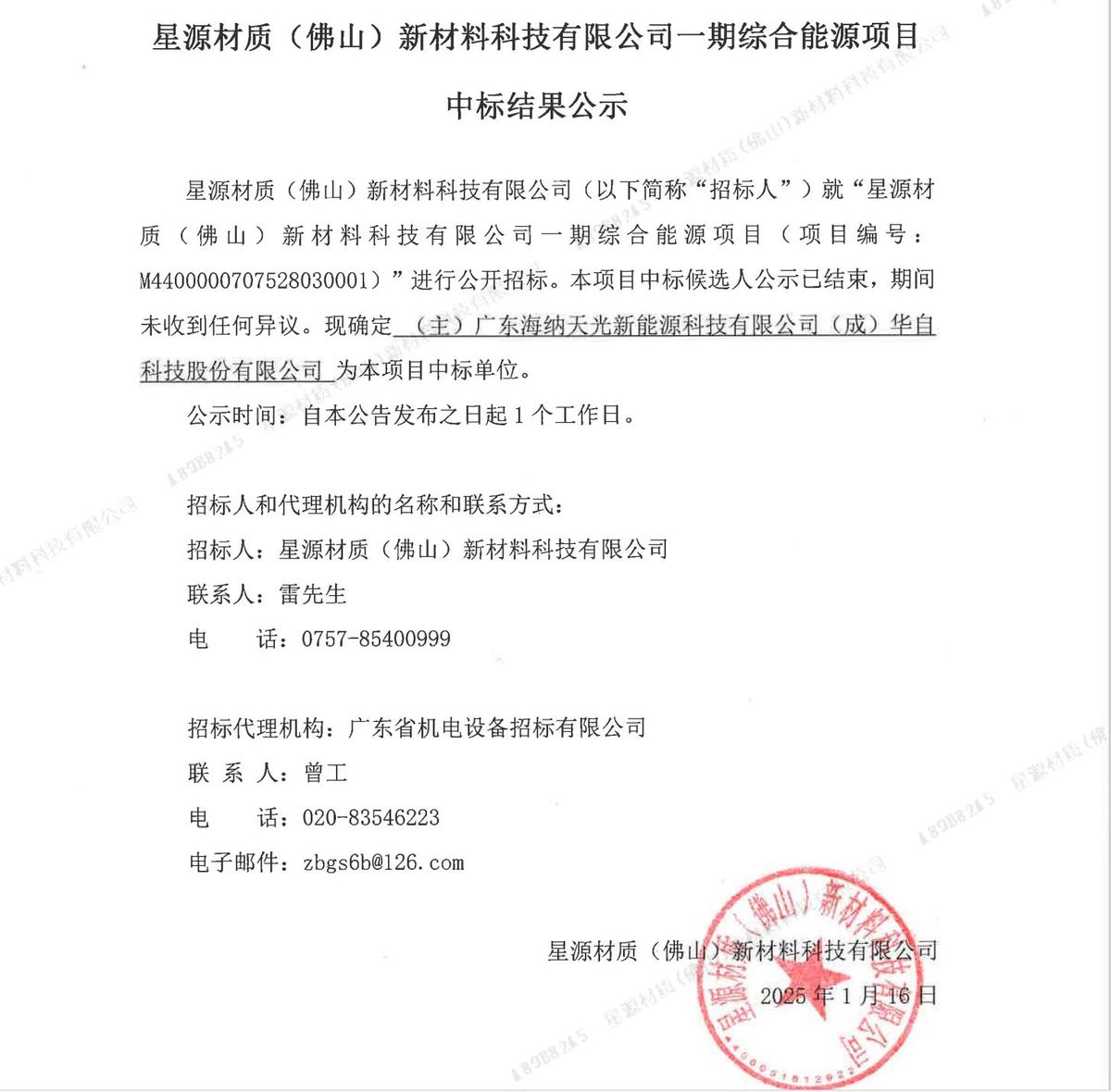
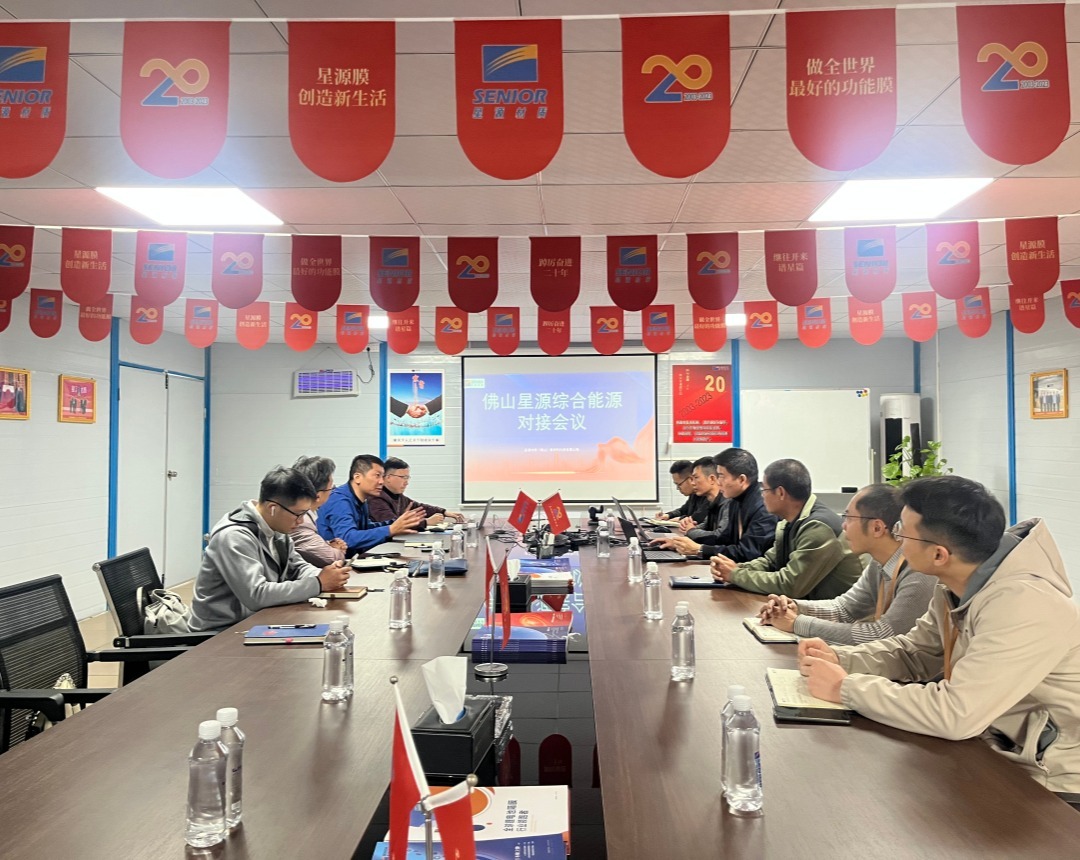
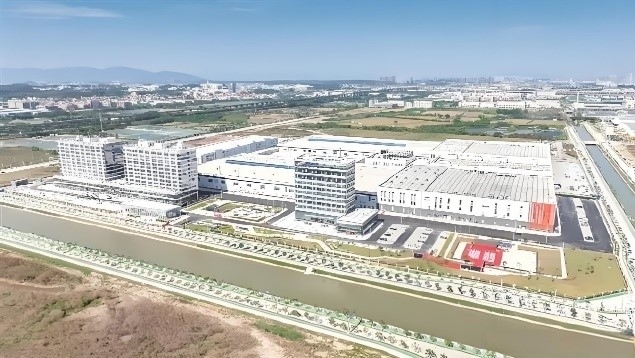
Recently, a consortium led by Guangdong Haina Tianguang New Energy Technology Co., Ltd. with the coordination of Hunan Zihua Technology Co., Ltd. has successfully won the bid for the Phase‑I Integrated Energy Project of Shenzhen Senior Materials (Foshan) New Materials Technology Co., Ltd. As a benchmark demonstration zero‑carbon factory project in the Guangdong‑Hong Kong‑Macao Greater Bay Area, the project is built around a 22.84 MW distributed photovoltaic power station and a 2.6 MW/11.29 MWh electrochemical energy storage system invested and constructed by Haina Tianguang. Combined with integrated technologies of the smart energy management platform, it forms a three‑in‑one green energy solution of photovoltaic generation + energy storage + intelligent management and control. This marks a breakthrough by new‑energy enterprises in promoting low‑carbon transformation of manufacturing industries through technological collaboration and innovation, setting a replicable innovative model for achieving Dual Carbon goals in the industrial sector of the Greater Bay Area.
I. Three Major Innovative Breakthroughs Establish a New Energy Paradigm for Zero‑Carbon Factories
1. PV‑Energy Storage Synergy for High‑efficiency Energy Utilization
Adopting an innovative model of self‑consumption with surplus electricity fed into the grid, the project fully utilises 91,000 m² of factory roof space and installs 35,876 pieces of high‑efficiency monocrystalline silicon modules (645 Wp/635 Wp), generating an annual power output of 22.21 million kWh. The supporting 2.6 MW/11.29 MWh energy storage system adopts an intelligent two‑charge‑two‑discharge strategy to store electricity during off‑peak hours and discharge during peak hours. Its annual discharge exceeds 5 million kWh, cutting power consumption costs by over 20%. Deep synergy between photovoltaics and energy storage raises the factory’s clean‑energy self‑sufficiency rate to 80%, reducing annual CO₂ emissions by approximately 18,046 tons.
2. Digital Twin Technology Builds a Smart Energy Hub
The deployed HZES3000 smart energy management system collects real‑time data from 12 categories of equipment including photovoltaic, energy storage and power distribution systems via Internet of Things technologies, constructing a 3D digital twin model. It features four core functions:
① Intelligent Forecasting: 72‑hour accurate prediction of photovoltaic power generation based on meteorological data and historical generation curves (error ≤ 5%);
② Dynamic Optimisation: Automatically matches time‑of‑use electricity price policies to optimise energy storage charge‑discharge strategies, increasing annual arbitrage gains by 15%;
③ Panoramic Monitoring: More than 2,000 monitoring points cover key equipment, with fault identification and response speed upgraded to second‑level;
④ Carbon Asset Management: Automatically generates carbon emission reports and enables full‑life‑cycle tracking of carbon footprints.
3. Integrated Technological Innovation Reshapes Industrial Architectural Aesthetics
The project innovatively applies photovoltaic TPO waterproof membranes and Building‑Integrated Photovoltaics (BIPV) technologies. Double‑glass 645 Wp modules are installed over a 21,000 m² carport area, generating 3.2 million kWh annually while perfectly combining sun‑shading, rain‑proofing functions with overall architectural aesthetics. Patented technologies such as W‑shaped water chutes and TPO composite tiles solve traditional roof leakage problems, achieving an IP68 waterproof rating and a 30% reduction in building load. It pioneers a new path integrating three‑fold values of functionality, power generation and aesthetics for industrial plants.
II. Four Core Advantages Set Industry Technical Benchmarks
1. Cutting‑edge Equipment Cluster Ensures High‑efficiency and Stable System Performance
The project adopts Tongwei TOPCon high‑efficiency modules (22.8% conversion efficiency), Huawei intelligent string inverters (98.52% Chinese efficiency) and CATL lithium‑iron phosphate energy storage cells (6,000‑cycle service life), with all key equipment certified by TÜV Rheinland. The innovative architecture of string‑type inversion + centralised management boosts overall system efficiency to 83%, 5 percentage points higher than the industry average.
2. Safety Protection System Consolidates Operational Defences
A safety matrix of three‑level fire protection + five‑fold electrical protection is established:
① Energy storage cabins are equipped with perfluorohexanone fire suppression systems and submerged fire‑fighting devices to rapidly curb thermal runaway within 30 seconds;
② The photovoltaic system features PID repair and AFCI arc protection functions, cutting fire risks by 90%;
③ The intelligent security platform integrates infrared thermal imaging, smoke sensors and AI video analysis for early warning of potential safety hazards.
3. Flexible Access Scheme Enables Grid‑friendly Interaction
With a 10 kV multi‑grid‑connection‑point design and virtual synchronous machine technologies, the system achieves rapid power regulation of ±10% and can participate in grid demand response. Tests show the energy storage system reaches a frequency modulation accuracy of 97% with a black‑start response time of less than 200 ms, providing a model for building a new‑type power system integrating source, grid, load and storage.
4. Full‑life‑cycle Services Empower Sustainable Development
Adopting an innovative investment‑construction‑operation model, the project is supported by a professional operation‑maintenance team and local spare‑parts warehouse to deliver 25‑year long‑term services:
① Operation‑maintenance efficiency increased by 40% via UAV inspection and intelligent cleaning robots;
② Annual attenuation rate of photovoltaic modules controlled within 0.4%;
③ Real‑time health assessment of the energy storage system extending battery service life by 20%.
III. Win‑win Social and Economic Benefits Lead the Green Manufacturing Revolution
As the investor and constructor of the Phase‑I Integrated Energy Project of Shenzhen Senior Materials (Foshan), Guangdong Haina Tianguang New Energy Technology Co., Ltd. has invested approximately 80 million CNY in the project. As a key integrated energy demonstration project in Foshan, it is expected to save 7,218 tons of standard coal annually and reduce pollutant emissions by over 50 tons, lifting Shenzhen Senior Materials to the top tier of the industry in ESG ratings. After commissioning, the factory’s energy consumption per unit product will drop by 18%, saving nearly 10 million CNY in electricity bills per year and achieving both environmental and economic benefits.
The successful implementation of this project not only sets a zero‑carbon production benchmark for the strategic emerging industry of new‑energy separators, but also explores a replicable solution of industrial roof resources + smart energy systems. Selected into Guangdong’s 2025 Green Manufacturing System Development Plan, its innovative model is rapidly being promoted in advanced manufacturing parks across the Greater Bay Area. It is projected to drive an annual increase of over 100 MW in regional clean‑energy installed capacity and accelerate the delivery of Dual Carbon goals.
In the future, Guangdong Haina Tianguang New Energy Technology Co., Ltd. will further deepen integrated innovation of photovoltaic, energy storage and digital technologies. With diversified new‑energy integrated solutions, it will facilitate the transformation and upgrading of manufacturing industries toward green, intelligent and sustainable development, injecting strong momentum into the high‑quality development of the Guangdong‑Hong Kong‑Macao Greater Bay Area.